How RainTaker works
RainTaker’s automatic bilge pumps combine water sensing, battery power and pump control to remove collected water. See how the system starts, manages low charge and resumes as solar charging restores power.
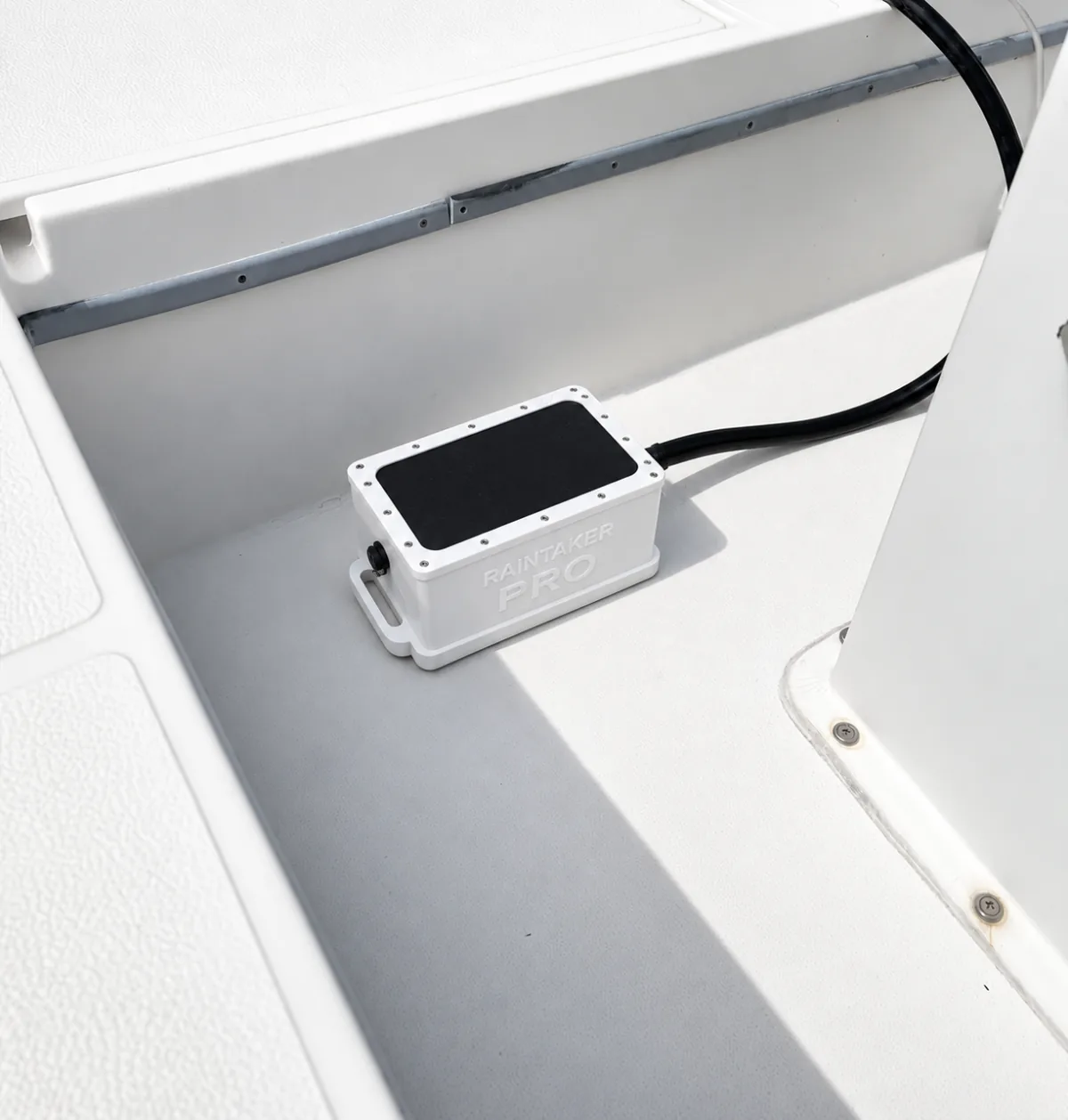
A bilge pump without a traditional float switch
The solid-state sensor detects water. The controller starts the pump, and the discharge hose gives that water a way out.
No mechanical float switch. No permanent connection to the boat’s battery.
Mechanical float switches have been used in boats for decades, but they introduce another moving component into an environment filled with water, debris, corrosion, and vibration. Raintaker takes a different approach.
Our solid-state bilge pump sensor has no moving float arm or mechanical switching mechanism. This makes the automatic pumping system especially well suited for demanding marine environments where dependable water detection matters.
Compare the modelsSet up for your boat
One unit in an open boat. Or a pump below deck, with the solar panel above.
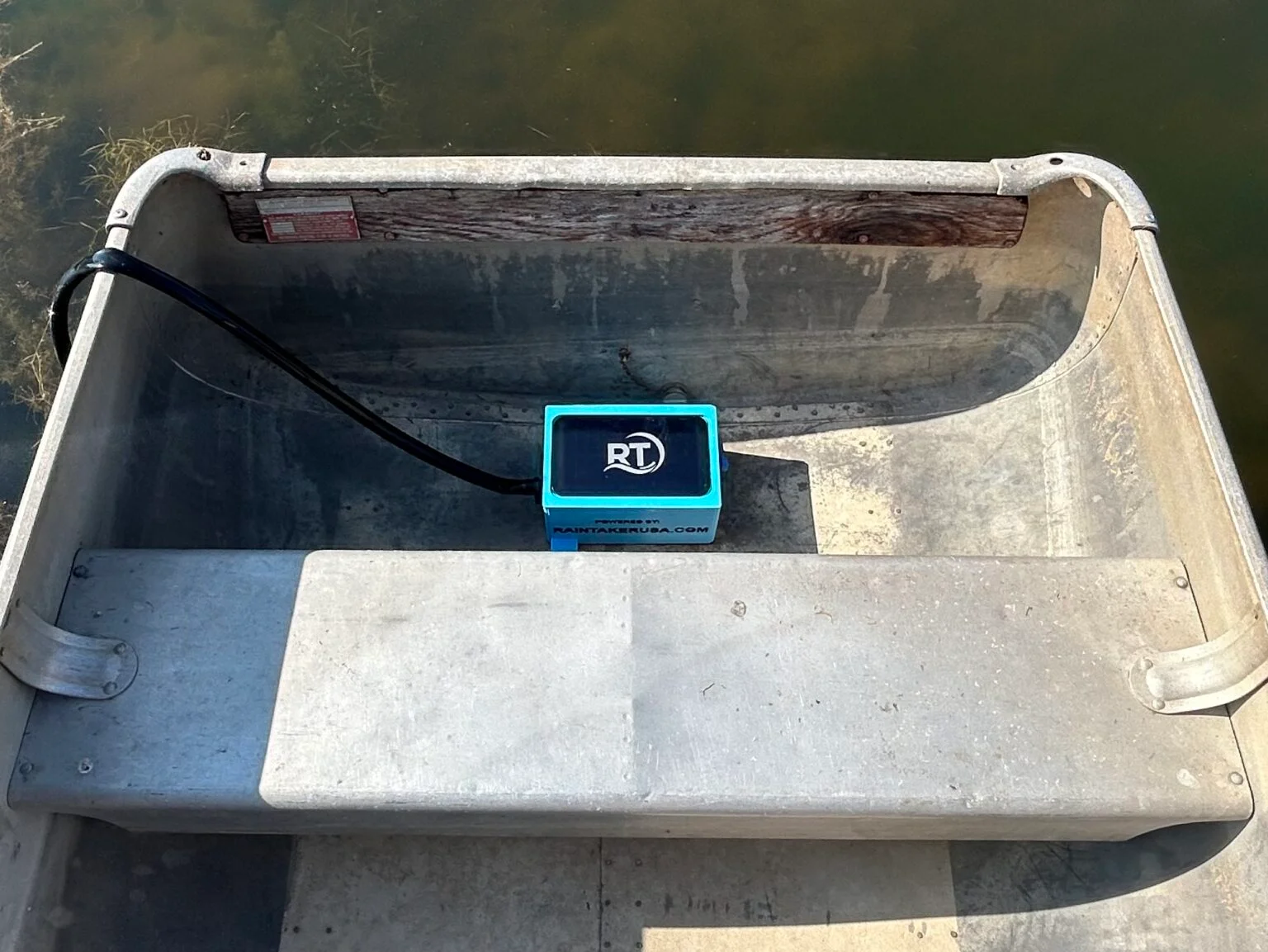
Mini: A simple setup No boat wiring
Place the unit
Position Mini where water collects, with the onboard panel exposed to daylight. Secure it as instructed.
Route the discharge
Connect the hose and route it safely outside the boat or away from the cover. Keep the route clear.
Check before leaving
Check the charge, sensor and discharge route. Mini uses its own battery, without permanent boat wiring.
The battery runs the pump
The sun recharges it
Compare charging options Sunlight replenishes the onboard battery.
Stored energy stays ready after dark.
When water arrives, the battery powers the pump.
Continuous pumping without sun
Approximate Mini and Pro runtime from a full charge. This is pumping time, not standby life. Charge, hose routing and discharge height affect available operation.
Ready after dark
Using stored energy
The battery powers the pump when collected water is detected. Solar charging replenishes that battery in daylight, rather than directly powering every pumping cycle.
Mini and Pro also support compatible AC wall charging. Pro has optional 12V and supplementary solar accessories. LowDeck keeps its separate panel above the covered bilge.
What happens as charge changes?
Explore the control logicWater is detected
The sensor detects collected water and the controller starts a pumping cycle when enough power is available.
Stored energy runs the pump
The onboard battery powers water removal. The pump does not depend on direct sunlight or a permanent connection to your house bank.
Low charge brings a pause
The controller can pause and retry while usable energy remains. Low-voltage protection stops pumping before full battery discharge.
Daylight replenishes the battery
When solar charging restores enough power and water is still detected, pumping can resume. Light conditions determine how quickly this happens.
Solid-state water detection & safe Ni-MH battery
Compare specifications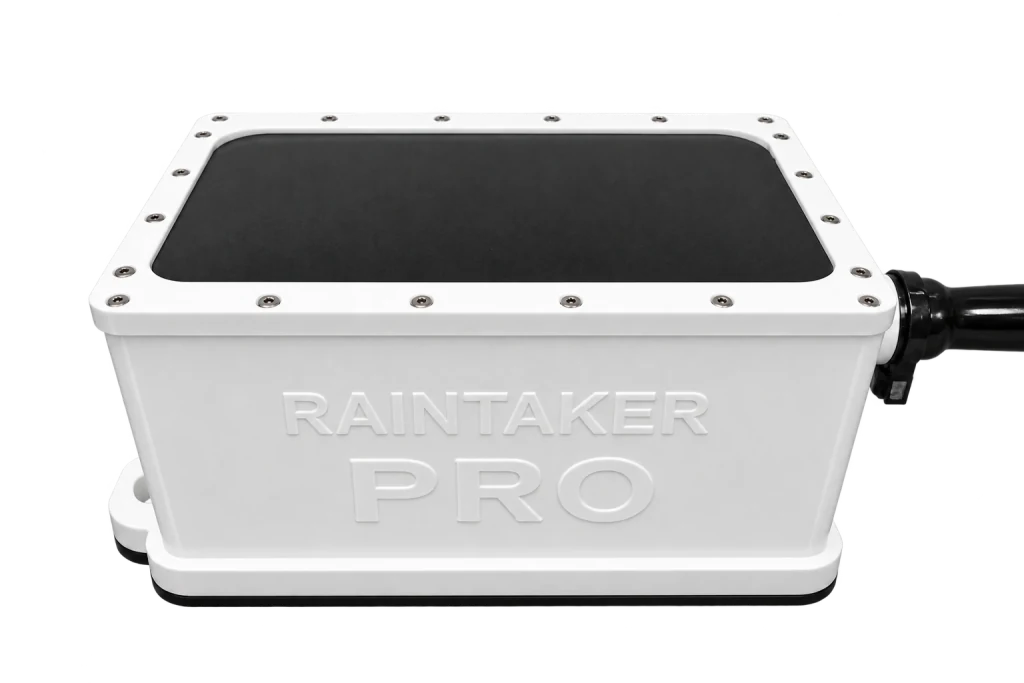
Water sensor
Detects collected water.
Controller
Starts pumping when sufficient power is available.
Pump & discharge
Moves water through the hose and out of the boat.
Mini and Pro use capacitive water detection. A solid-state sensor detects collected water without a mechanical float switch that has to rise, fall or pivot.
The sensor signals the controller; the controller starts a pumping cycle when sufficient power is available. Position the unit where water collects and follow the model’s setup instructions.
As battery voltage falls, the controller can pause the pump and retry in shorter on/off cycles while water is still detected. This can happen after dark, using the energy remaining in the battery.
The controller starts a cycle only when there is enough power to move water. If usable energy is exhausted, the protective cutoff stops pumping before full battery discharge. A pause does not recharge the battery or create additional energy.
After a protective stop, solar charging can restore enough power for the controller to resume pumping automatically, provided water is still detected.
Restart depends on the light reaching the panel and the charge available. Keep Mini and Pro’s onboard panels exposed to daylight; LowDeck’s separate panel stays above the covered bilge. Shade and panel placement affect charging.
Mini and Pro use rechargeable nickel-metal hydride (NiMH) batteries. Their stored charge powers the pump, and the solar charge controller regulates charging from the onboard panel.
Both also support compatible AC wall charging. Pro’s optional 12V cord charges the internal battery and supports operation from an external battery; its optional 5W panel adds solar charging capacity. These accessories are Pro-only.
Mini and Pro have buoyant bodies and can float as the surrounding water rises, including while waiting for sufficient charge to resume pumping.
The hose must still carry water safely out of the boat. Follow the placement and securing instructions, keep the outlet clear and check the route before leaving the system in use. LowDeck has a separate pump and topside solar module, with its own installation requirements.
Mini’s pump has a nominal rating of 500 gallons per hour; Pro’s is 1,100 gallons per hour. These are component ratings, not a promise that the installed system will deliver that volume through every hose setup.
Discharge height, hose diameter, hose length and bends affect actual flow. Keep the route clear and check water removal in your own setup. Continuous runtime, intermittent operation and gallons removed are different measurements; multiplying a nominal rating by runtime does not establish the volume removed per charge.
See just how easy
RainTaker is to use
From positioning the system to routing the hose and checking the pump. A straightforward walkthrough of the setup and water removal.
Find your RainTaker
Frequently asked questions
More help & supportNo. The battery supplies the pump. Stored charge can power water removal after dark; solar charging replenishes that charge when daylight is available. Available operation depends on charge and the discharge setup.
No. Around 25–30 minutes refers to continuous pumping from a full charge without sun for Mini and Pro. It does not describe standby time or guarantee uninterrupted pumping overnight. In normal use, pumping is triggered by collected water.
The controller may pause and retry in shorter cycles at low charge while water is still detected, including after dark using remaining stored energy. If usable energy is exhausted, low-voltage protection stops pumping before full discharge. Solar charging can restore enough power for automatic resumption; resting alone does not recharge the battery.
Mini and Pro have buoyant bodies and can float as water rises around them. Follow their placement, securing and hose-routing instructions. LowDeck uses separate pump and solar modules; check its model-specific placement guidance.
The optional 12V accessory cord and 5W supplementary solar panel are Pro-only. Mini supports onboard solar and compatible AC wall charging. LowDeck uses a separate 5W topside solar panel.
The controller starts a pumping cycle only when enough power is available to move water. Below its operating threshold, it pauses instead of continuing to run with too little power. Actual water flow still depends on the hose route and discharge height.
RainTaker provides supplementary water removal. It does not replace a primary installed bilge pump or required safety equipment. Check the system before leaving it in use and follow the product-specific instructions.
Find the system for your boat
Compare the placement, pumping capacity and charging options across the range.
Choose your RainTaker