Quick-start guide
Open RainTaker’s published setup guide for the all-in-one systems. Follow the instructions supplied with your model.
Open the guide
Get your RainTaker set up, understand how it works and find an answer when something doesn’t look right.
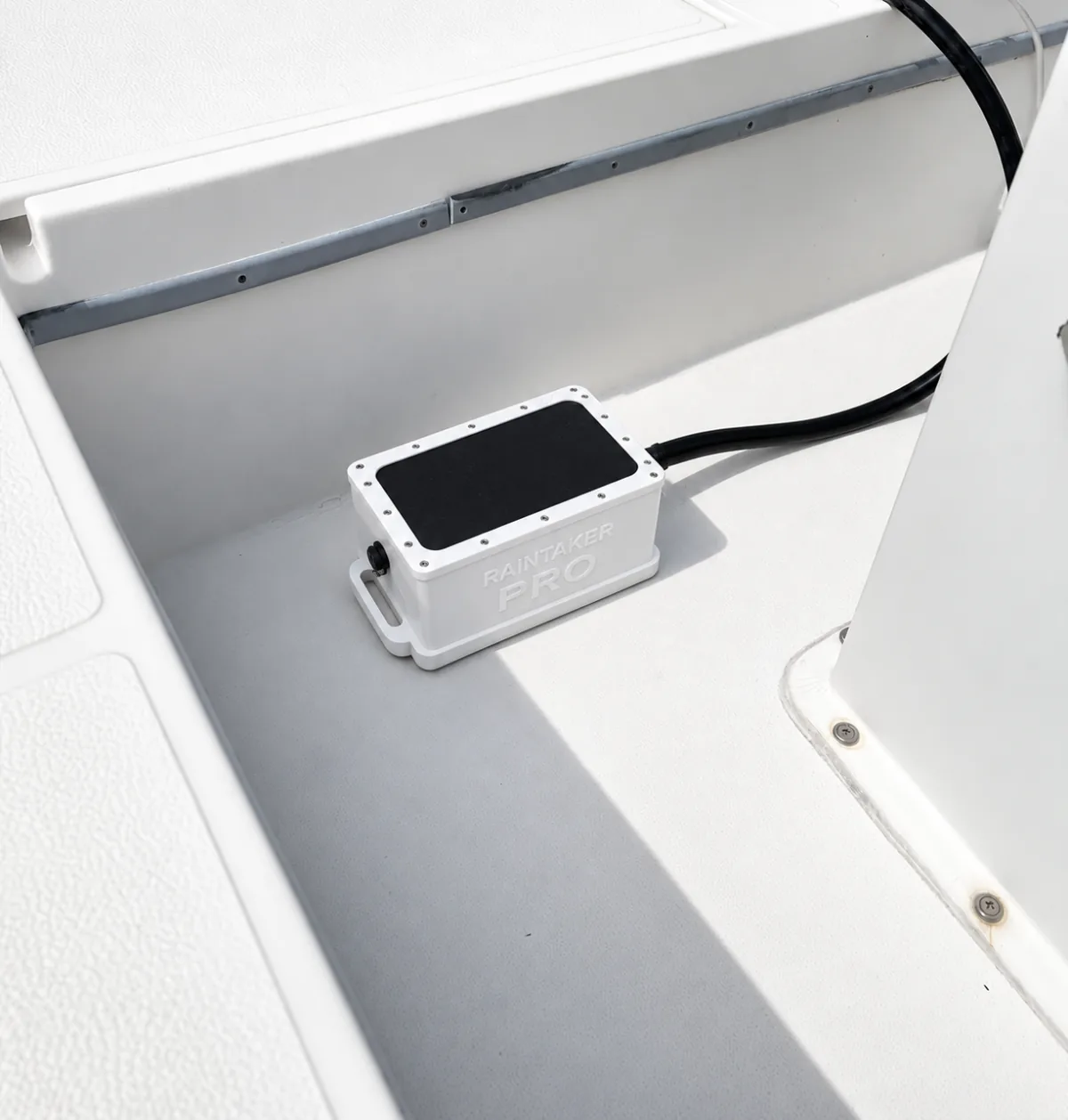
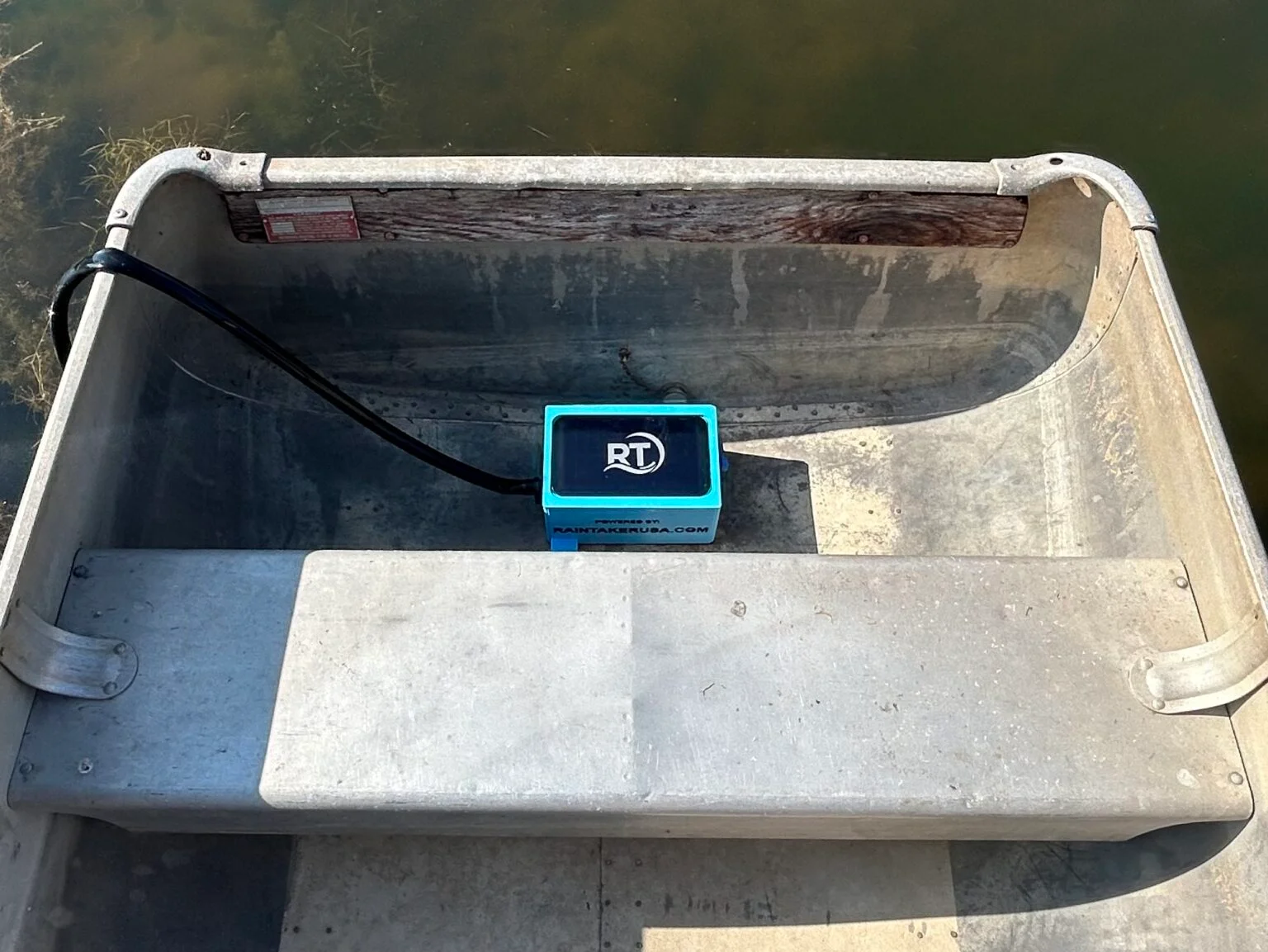
Position Mini where water collects, with the onboard panel exposed to daylight. Secure it as instructed.
Connect the hose and route it safely outside the boat or away from the cover. Keep the route clear.
Check the charge, sensor and discharge route. Mini uses its own battery, without permanent boat wiring.
Start with where water collects. Mini is the compact option for dinghies, inflatables, small open boats and supported covers. Pro adds pumping capacity and charging options for open boats. LowDeck separates the pump in a covered bilge from the charging panel above deck. Check space, placement and discharge routing as well as boat size.
Compare modelsPlace and secure the pump where water collects, following your model’s instructions. Mini and Pro need their onboard solar panel exposed to daylight. LowDeck’s pump sits in the covered bilge, with its separate solar housing above deck. Keep the intake, sensor and discharge route clear, and check the system before leaving it in use.
Route water safely outside the boat, or away from the collection point on a cover. Keep the hose clear of kinks and obstructions. Hose length, bends, diameter and discharge height affect actual flow. Check that the outlet stays clear and water is leaving the boat in your installed setup.
Yes, on a suitable supported cover. Position it where water collects, with enough support for the unit’s weight, the panel in daylight and a safe discharge route. Follow the setup instructions for securing it and check your cover arrangement before leaving it in use.
Mini, Pro and LowDeck are suitable for freshwater and saltwater environments. Follow your model’s instructions for marine care, cleaning and placement. Keep the sensor, intake and hose clear and check the setup routinely.
No. Stored energy in the battery powers the pump, including after dark. Solar charging replenishes the battery when daylight is available. Mini and Pro also support compatible AC wall charging; Pro offers optional 12V and supplementary solar accessories. LowDeck uses its separate 5W topside solar panel.
Around 25–30 minutes of continuous pumping from a full charge without sunlight. This is pumping time, not standby time or a guaranteed overnight duty cycle. In normal use, collected water triggers the pump. Charge, water volume and discharge setup affect available operation.
Pro also provides around 25–30 minutes of continuous pumping from a full charge without sun. Its larger battery powers a larger pump. More capacity does not mean double the runtime. Pro’s optional 12V cord can charge it and support operation from a compatible external battery.
The optional 25ft 12V accessory cord and 5W supplementary solar panel are Pro-only. Mini supports onboard solar and compatible AC wall charging. LowDeck uses a separate 5W topside panel; ask RainTaker about any other charging arrangement for your LowDeck.
See Pro charging accessoriesA permanent connection to the house bank is not required. RainTaker carries its own battery reserve. The optional Pro-only 12V cord plugs into a compatible accessory socket when you want an external power source.
Mini and Pro use rechargeable nickel-metal hydride (NiMH) batteries. Stored charge runs the pump, with controlled charging and low-voltage protection. Follow your model’s instructions for charging, storage and enclosed-space placement. LowDeck has a separate pump and solar module with its own setup requirements.
See the battery and control detailsCheck the available charge and whether water is reaching the sensor. Check the sensor, intake and hose for debris or obstructions, following your model’s cleaning instructions. Make sure the hose is not kinked and the outlet is clear. At low charge, the controller may pause until enough power is available. If it still does not operate after these checks, contact RainTaker with your model and a photo of the setup.
Get help with your setupAt low battery voltage, the controller can pause and retry in shorter cycles while water is still detected. This can happen after dark using remaining stored energy. Low-voltage protection stops pumping before full battery discharge. A pause does not recharge the battery; solar charging can restore enough power to resume.
The controller stops pumping before the battery is fully discharged. When solar charging restores enough power and water is still detected, the system can resume automatically. Keep the panel exposed to daylight. Restart timing depends on light and available charge.
Actual flow depends on the discharge route. Check the hose for kinks, debris or an obstructed outlet and review its length and discharge height. Mini’s 500 GPH and Pro’s 1,100 GPH are nominal pump ratings, not guaranteed installed flow. The controller starts a cycle only when sufficient power is available to move water. Contact RainTaker if flow still looks wrong after checking the setup.
Use the topside voltage display and voltage test button to check battery voltage. This button does not run the pump. Check the Communication Cable, discharge route and panel placement as instructed before leaving the boat moored.
Mini and Pro have buoyant bodies and can float as water rises around them, including while waiting for sufficient charge. Follow the placement, securing and hose-routing instructions. LowDeck uses separate pump and solar modules; check its specific placement guidance.
Mini and Pro use solid-state water detection, without a moving float that has to rise, fall or pivot. A conventional float-switch installation also depends on the boat’s battery and its wiring. RainTaker’s own battery and automatic control provide an independent water-removal arrangement. Routine inspection and model-specific setup are still needed.
See how the system worksRainTaker provides supplementary water removal. Retain your primary installed bilge pump and required safety equipment, and follow the product-specific setup and operating instructions.
The current range includes free U.S. shipping. Pro’s optional solar panel and 12V cord ship separately from the unit. For delivery questions about an order or shipping outside the U.S., contact RainTaker with your destination and order number if you have one.
RainTaker lists a two-year warranty across the current range. Contact the team with your model, order details and a description or photo of the issue. They can confirm the applicable coverage and next steps before you arrange a return.
Contact RainTakerEmail RainTaker with your order number, the model and what you need help with. Ask the team to confirm the return process and applicable terms before sending anything back.
Get order supportIf you have an open boat — dinghy, Whaler, Zodiac, skiff or another open boat where water collects in the hull or open floor — RainTaker provides automatic water removal. The systems are turnkey and require no wiring or modification to your boat. Check placement and discharge routing for your setup.
Use the included wall charger on receipt and pre-charge the internal battery for 4–6 hours. Place the pump at the lowest collection point, secure it as instructed and lay the discharge hose over the side of the boat. Mini and Pro recharge in daylight; pumping uses their internal battery, including after dark. Route or trim the hose according to the supplied instructions.
Mini and Pro use built-in solid-state sensors to detect rising water. When water is detected and sufficient stored power is available, the controller activates the internal pump. The published detection point is around one inch or less. The pump stops and monitors for more water. RainTaker pumps do not use float switches.
RainTaker is designed for boat surfaces including fiberglass, wood and aluminum. Its bottom traction pad helps keep it in place, and composite construction helps protect the boat’s finish. Use it on suitable covers, the deck or open bilge, with the solar panel exposed to daylight. Follow the model instructions for secure placement.
No. Solar charging replenishes the battery during daylight. The internal battery runs the pump, day or night, while sufficient charge remains. Keep the panel in view of the sky when possible; shade, weather and water-removal demand affect the available reserve. The included wall charger provides a top-off or charge before storage.
RainTaker combines the pump, automatic water detection and its own battery. Mini has a nominal 500 GPH pump and Pro a nominal 1,100 GPH pump. No permanent boat wiring is required. Installed flow depends on hose length, discharge height and available power. Use it as supplementary water removal and retain required safety equipment and the primary installed bilge pump.
RainTaker LowDeck is for covered bilges in I/Os, cruisers, larger center consoles and other suitable closed boats up to 35 feet. The pump sits below deck; its separate 5W solar panel sits above in daylight. The removable panel has a waterproof quick connect at the panel end to help with routing. The system uses its own battery for automatic pumping.
Mini’s published nominal pump rating is 500 GPH; Pro and LowDeck use 1,100 GPH pumps. RainTaker’s published examples include 100+ gallons per Mini charge and 150+ gallons per Pro charge. These are condition-dependent examples, rather than guaranteed installed flow or storm capacity. Hose routing, discharge height, water, charge and sunlight all affect results. The controller can pause and retry as stored charge changes.
RainTaker is designed as a complete automatic water-removal system. Solid-state sensing replaces the moving float arm of a conventional float switch. Mini and Pro combine rechargeable Ni-MH batteries, pump control and solar charging in a compact unit, providing an independent source of pumping power without a permanent connection to the boat’s primary battery.
Every RainTaker comes with a 2-year no-hassle warranty. Contact RainTaker about the published factory extended-protection option for up to four years total coverage. For a warranty claim, have your model and order number ready and email joe@raintaker.com or call +1 (954) 864-2550. A 30-day satisfaction guarantee also applies.
Charge the pump with the included charger before first use. Set it at the lowest supported spot on a suitable cover, and lay the included discharge hose over the side. Check the hose reaches safely, trim it only as instructed and leave the onboard panel exposed to daylight. The pump automatically removes collected water using its internal battery.
Built-in sensors detect rising water and activate the pump. The unit pumps until water is removed, then monitors for further accumulation, day or night. The controller manages available battery energy and can pause or cycle as charge changes. The published detection point is around one inch or less.
RainTaker Mini is designed for suitable covers and awnings including Sunbrella, canvas, polyester and PVC. Water weighs about 8.6 lb per gallon in the published FAQ, so 30 gallons can add roughly 258 lb to a cover. Removing standing water reduces stress on windshields and accessories and helps avoid mildew and mold. Check that the cover can support the unit and follow placement instructions.
No. The unit recharges in daylight, including in less than fully sunny conditions, while pumping uses stored battery power. Leave the panel exposed to the sky when possible. The wall charger is included for battery top-off and seasonal storage; shaded conditions and pumping demand may require additional charging.
Both remove water automatically and support solar and included wall charging. Mini uses a standard-capacity battery and nominal 500 GPH pump for small boats and covers. Pro has three times the battery capacity and a nominal 1,100 GPH pump for more demanding water removal, with freshwater, saltwater and brackish-water use. Both use solid-state sensing rather than float sensors. Extra battery capacity is not a promise of longer continuous pumping time.
RainTaker Mini comes with a 2-year no-hassle warranty and a 30-day satisfaction guarantee. RainTaker stands behind the product and asks owners with concerns to contact the team for help. Contact joe@raintaker.com for return instructions.
Open RainTaker’s published setup guide for the all-in-one systems. Follow the instructions supplied with your model.
Open the guideA covered bilge needs its own arrangement. Ask about pump clearance, topside panel placement and cable routing for your boat.
Ask about LowDeckSee RainTaker’s existing Pro water-removal demonstration.
Watch on YouTube
Tell us your model, what you’re seeing and how the hose and solar panel are positioned. A photo of the setup helps us understand your boat.
Email RainTaker joe@raintaker.comFor order or warranty help, include your order number if you have it.
Both units remove collected water automatically. Both can be charged by the sun or topped off using the included wall charger.
Compare all model specificationsA compact system with a standard-capacity battery, an electronic water sensor and a built-in pump rated at a nominal 500 GPH. Designed for suitable small boats, dinghies and covers.
A battery with three times Mini’s capacity and a larger pump rated at a nominal 1,100 GPH, for more demanding water-removal jobs. Rated for salt, fresh and brackish water.
Both use electronic sensors rather than float sensors, and resist accidental activation when stored upside down. Installed flow depends on discharge height and hose routing.

Check a quick answer, or talk to us about your boat and order.
Mini suits dinghies, small boats and boat covers. Pro adds more pumping capacity for larger open boats. LowDeck is built for covered bilges. Compare the models.
Yes. Every order ships free within the U.S. International shipping is a flat US$99 per order.
Every RainTaker includes a 2-year factory warranty. Email us your model and order number and we will help you sort it out.
Opens a draft in your email app.